Department of Computer Science and Engineering

Department Research

Research projects and scholarly work by this department.

18 Research Items

Research from Department of Computer Science and Engineering

Showing 18 research items from this department.

Wearable Technology to Assist the Patients Infected with Novel Coronavirus (COVID-19)
CSE Apr 6, 2026, 9:22 PM

Wearable Technology to Assist the Patients Infected with Novel Coronavirus (COVID-19)

Wearable technology plays a significant role in our daily life as well as in the healthcare industry. The recent coronavirus pandemic has taken the world’s healthcare systems by surprise. Although trials of possible vaccines are underway, it would take a long time before the vaccines are permitted for public use. Maximum government efforts are currently geared towards preventing the spread of the coronavirus and predicting probable hot zones. The essential and healthcare workers are the most vulnerable towards coronavirus infections due to their required proximity to potential coronavirus patients. Wearable technology can potentially assist in these regards by providing real- time remote monitoring, symptoms prediction, contact tracing, etc. The goal of this work is to discuss the different existing wearable monitoring devices (respiration rate, heart rate, temperature, and oxygen saturation) and respiratory support systems (ventilators, CPAP devices, and oxygen therapy) which are frequently used to assist the coronavirus affected people. The devices are described based on the services they provide, their working procedures as well as comparative analysis of their merits and demerits with cost. A comparative discussion with probable future trends is also drawn to select the best technology for COVID-19 infected patients. It is envisaged that wearable technology is only capable of providing initial treatment that can reduce the spread of this pandemic.

Read research
Emotion Recognition from EEG signal using Convolutional Neural Network
CSE Apr 6, 2026, 9:21 PM

Emotion Recognition from EEG signal using Convolutional Neural Network

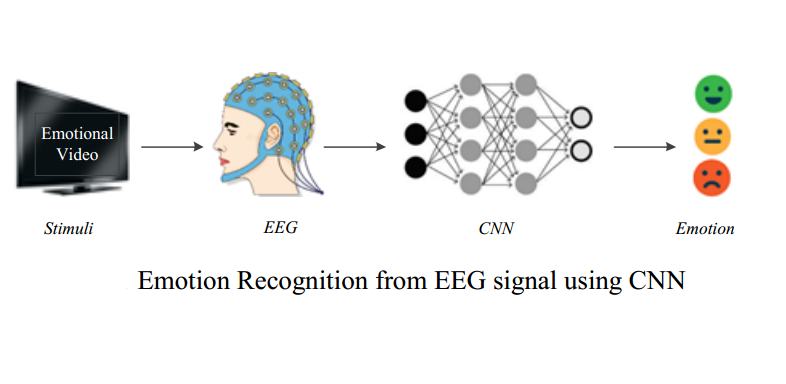
Electroencephalogram (EEG) that measures the electrical activity of the brain has been used extensively to recognize emotion. Normally feature based emotion recognition requires a strong effort to design the perfect feature or feature set related to the classification of emotion. To curtail the manual human effort we designed a model by using a virtual image from EEG with Convolutional Neural Network (CNN). Initially, we planned to calculate Pearson’s correlation coefficients form different sub-bands of EEG to formulate a virtual image. Later, this virtual image was fed into a CNN architecture to classify emotion. We made two distinct protocols; between these, protocol-1 was to classify positive and negative emotion and protocol-2 was to classify four distinct emotions using internationally authorized DEAP dataset. Our proposed method is helpful in recognizing emotions efficiently.

Read research
Back to Department of Computer Science and Engineering