
The Department of Computer Science and Engineering (CSE) at BAUET has been shaping skilled computing professionals since the academic session 2014-2015, under the Faculty of Electrical and Computer Engineering.
Department of Computer Science and Engineering
About the Department
The story, vision and character of this department.
2014-15
Academic session established
12
Program Outcomes
10+
Specialized laboratories
20%
Students on tuition waivers
Our Story
History
How this department began and where it is headed.
The Department of Computer Science and Engineering started its journey from the academic session 2014-2015 under the Faculty of Electrical and Computer Engineering. The department is committed to excellent professional competence, a pragmatic curriculum and expert teaching viewpoints, aiming to achieve an excellent grade in the field of computer science and engineering.
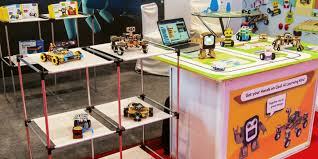
The department is equipped with smart classrooms and state-of-the-art laboratories with interactive boards, including a Software Lab, Network Lab, Operating System Lab, Microprocessor and Microcontroller Lab, Computer Graphics Lab, Database Lab, DLD Lab, Mobile Game and Apps Testing Lab, Sheikh Russel Digital Lab and GIS Lab.
The department aims to produce highly qualified and skilled computer engineers and to provide leadership skills to undergraduates. The curriculum and research focus areas include hardware, software, networking and communication, bioinformatics, database and data mining, privacy and cryptography, computer graphics and digital signal processing, algorithm and complexity, mobile computing, artificial intelligence and robotics, and system analysis, design and development.
Prospective students should have shown considerable ability in mathematics and logical reasoning. Mathematics and basic science courses are mandatory, supplemented by social science, management, accounting, economics and communication skills classes, making the syllabus a balanced and reasonably complete one. The program follows the Outcome Based Education (OBE) approach per UGC and BAUET guidelines, and an Integrated Design Project (IDP) was introduced from 2020 across all corresponding undergraduate batches.
Direction
Vision & Mission
The guiding principles of this department.
Our Vision
To create skilled and competent professionals in the field of Computer Science and Engineering with high morals to meet the national and global needs through creative research and innovations.
Our Mission
Department of CSE is working with the following missions:
- To provide high quality state of the art education and knowledge in Computer Science and Engineering, to produce competent engineers, capable of solving real-world complex engineering problems to meet the needs of industry and society.
- To contribute towards the creation of new knowledge through eminence research and innovation in CSE and allied fields to address emerging national and global issues for well-being of the society.
- To enable students in attaining required ethics with an attitude of entrepreneurial skills, ethical values and social consciences.
- To embed leadership qualities amongst the students to follow successful professional career paths and to pursue advanced studies in computer engineering and a life-long learner in cutting edge developments in the field of computing and IT.
Outcome Based Education
Program Outcomes (POs)
The knowledge, skills and attitudes every graduate is expected to have when they complete the program.
PO 1
Engineering Knowledge
Apply the knowledge of mathematics, science, engineering fundamentals, and an engineering specialization to the solution of complex engineering problems.
PO 2
Problem Analysis
Identify, formulate, research literature, and analyze complex engineering problems reaching substantiated conclusions using first principles of mathematics, natural sciences, and engineering sciences.
PO 3
Design/Development of Solutions
Design solutions for complex engineering problems and design system components or processes that meet the specified needs with appropriate consideration for public health and safety as well as cultural, social and environmental concerns.
PO 4
Investigation
Conduct investigations of complex problems, considering design of experiments, analysis and interpretation of data and synthesis of information to provide valid conclusions.
PO 5
Modern Tool Usage
Create, select, and apply appropriate techniques, resources, and modern engineering and IT tools including prediction and modeling to complex engineering activities with an understanding of the limitations.
PO 6
The Engineer and Society
Apply reasoning informed by the contextual knowledge to assess societal, health, safety, legal and cultural issues and the consequent responsibilities relevant to the professional engineering practice.
PO 7
Environment and Sustainability
Understand the impact of the professional engineering solutions in societal and environmental contexts, and demonstrate the knowledge of need for sustainable development.
PO 8
Ethics
Apply ethical principles and commit to professional Ethics and responsibilities and norms of the engineering practice.
PO 9
Individual and Team Work
Function effectively as an individual, and as a member or leader in diverse teams, and in multidisciplinary settings.
PO 10
Communication
Communicate effectively on complex engineering activities with the engineering community and with society at large. Some of them are, being able to comprehend and write effective reports and design documentation, make effective presentations, and give and receive clear instructions.
PO 11
Project Management and Finance
Demonstrate knowledge and understanding of the engineering and management principles and apply these to one's own work, as a member and leader in a team, to manage projects and in multidisciplinary environments.
PO 12
Life Long Learning
Recognize the need for, and have the preparation and ability to engage in independent and lifelong learning in the broadest context of technological change.
Outcome Based Education
Program Educational Objectives (PEOs)
The career-ready outcomes graduates are prepared to achieve within a few years of completing the program.
PEO 1
Graduates will grow and practice as computing professionals both in industry and government and/or will be able to successfully pursue advanced degrees.
PEO 2
Graduates will provide effective solutions to the complex engineering problems related to software and/or hardware by creating, selecting, applying appropriate and modern technologies, skills and tools.
PEO 3
Graduates will communicate effectively and work collaboratively maintaining high level of ethical and professional values for improving the society.
PEO 4
Graduates will take leadership positions in the industry and also initiate businesses offering innovative technical solutions to national and international problems.
Infrastructure
Facilities & Laboratories
The labs and learning spaces that support hands-on education.
Scholarship
Research Areas
The fields of study and inquiry this department pursues.
HardwareSoftwareNetworking and CommunicationBioinformaticsDatabase and Data MiningPrivacy and CryptographyComputer Graphics and Digital Signal ProcessingAlgorithm and ComplexityMobile ComputingArtificial Intelligence and RoboticsSystem Analysis Design and Development
The CSE program follows the Outcome Based Education (OBE) approach per UGC and BAUET guidelines. An Integrated Design Project (IDP) was introduced from 2020 across all corresponding undergraduate batches. Around 20% of students receive 25-100% tuition fee waivers based on previous semester results, and admission scholarships are awarded based on HSC results with a 3% freedom fighter quota. The department maintains low student-teacher ratios of 15-35 in theory and 10-25 in labs. Faculty members hold Ph.D. degrees, with adjunct faculty from RUET, BUET and RU. Graduates are working at renowned organizations locally and internationally, with multinational companies like Intel, Microsoft, Google and Facebook recruiting qualified CSE graduates.