
B.Sc. in Information and Communication Engineering (ICE)
A 4-year undergraduate program combining computer science, communication engineering, software development, IoT and networks.
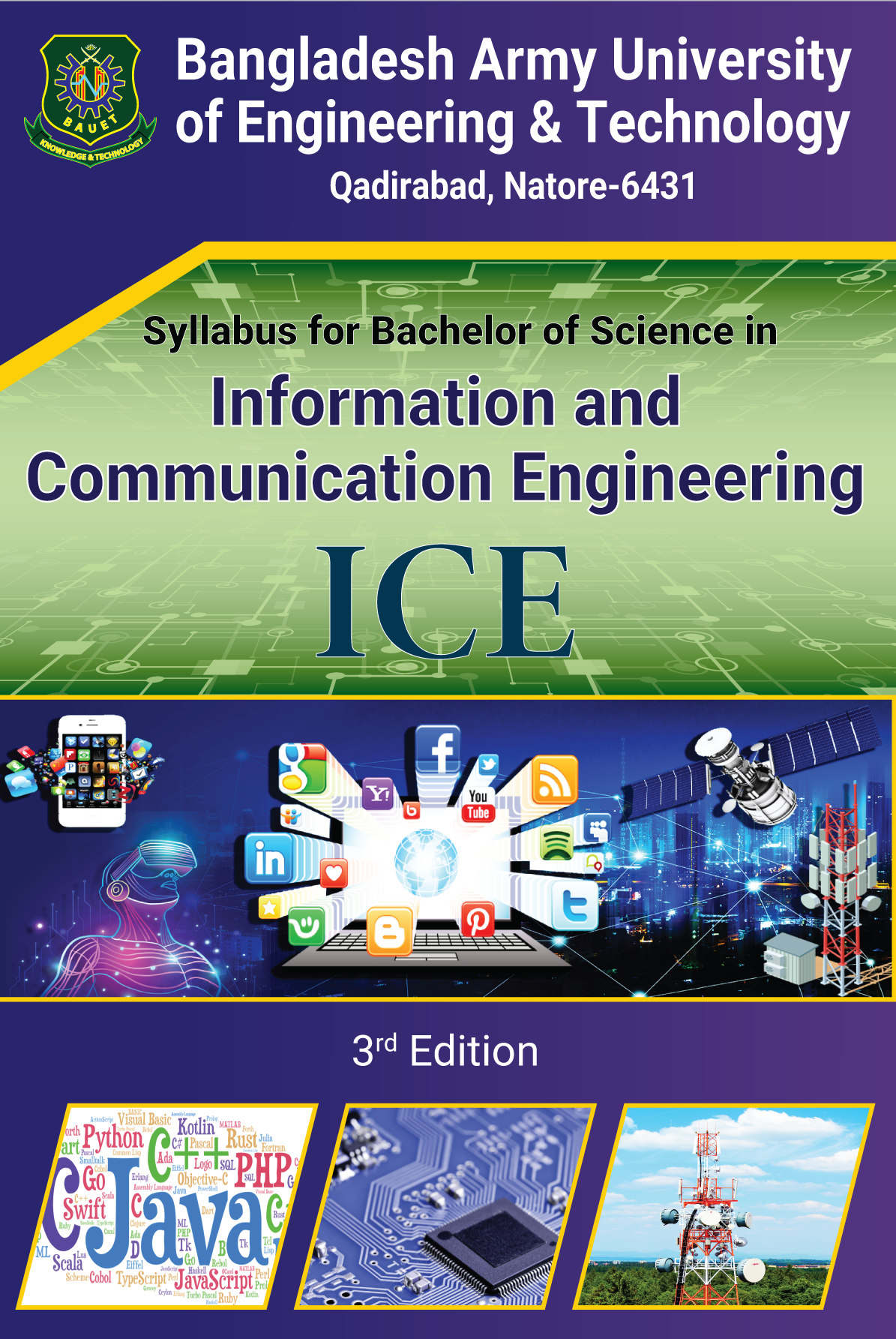
The Information and Communication Engineering (ICE) program combines computer science, communication engineering, software development, IoT, circuits and networks. Students learn to design and build the systems that power modern communication and information technology.
Students must complete at least 160.0 credit hours with a minimum cumulative GPA of 2.20 to graduate. The academic year is divided into Summer (Jan-Jun) and Fall (Jul-Dec) semesters.
The full course structure, semester-wise curriculum and detailed course outlines are available in the official syllabus document attached below.
Curriculum & Syllabus
View or download the official syllabus versions for this program.
Admission Requirements
Eligibility criteria and entry requirements for this program.
Applicants must have at least second division or a minimum GPA of 2.5 in both SSC and HSC examinations, with a combined total (SSC+HSC) not lower than 6.00. A science background with mathematics is required.
O/A Level applicants need a minimum of 5 subjects in O Level and 2 in A Level, with a minimum B grade in 4 subjects of O Level and a minimum C grade in 2 subjects in A Level. Children of Freedom Fighters need a minimum combined GPA of 5.00. All applicants must qualify in the admission test, including a minimum English score.
Career Prospects
Where this degree can take you.
Graduates pursue careers in software development, communication engineering, networking, IoT and embedded systems. Companies such as Intel, Microsoft, Google and Facebook actively recruit qualified ICE graduates worldwide, with demand growing in Bangladesh, the USA, Japan, Australia and Canada.